Start with the question, not the format
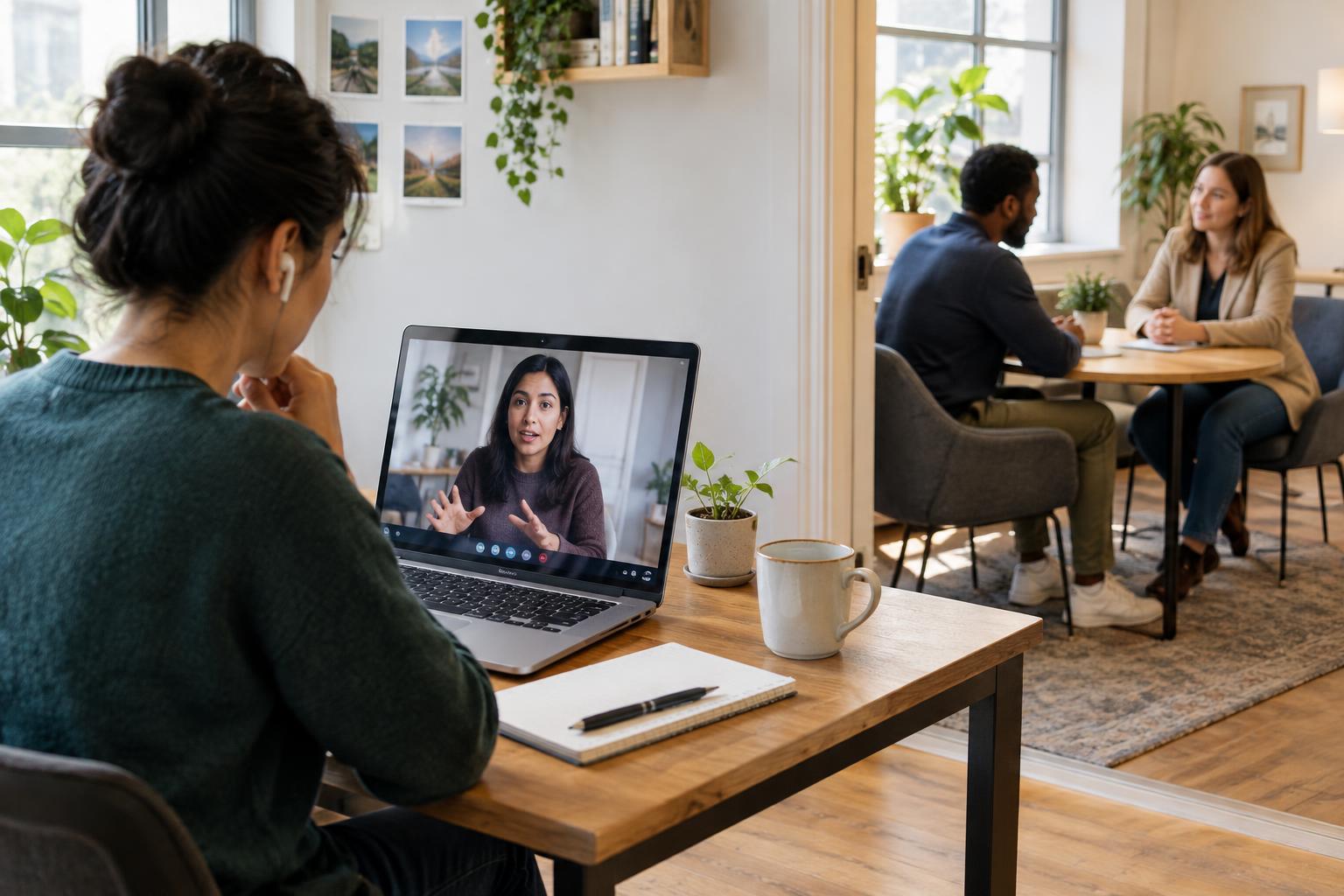
Customer interviews help a team understand how people describe their needs, make choices and encounter problems. Both remote and in-person conversations can reveal useful details. The better format depends on what the team needs to learn and what participants need in order to speak comfortably.
If the goal is to explore how customers compare options or recall a recent decision, a remote conversation may provide everything needed. If the goal is to watch someone handle a physical product or move through a space, meeting in person may make important details easier to see. Write down the interview objective before booking sessions, then ask which setting will make the relevant behavior or explanation most accessible.
Reach and convenience favor remote interviews
Remote interviews remove travel for both parties. They can make it easier to speak with customers in different places, include participants with limited time and schedule shorter sessions. A participant may also feel more at ease in a familiar setting. Screen sharing can help when the discussion concerns a website, an email or another digital experience.
Convenience has limits. A weak connection, unfamiliar software or interruptions can break the flow of a conversation. Remote recruiting can also favor people who have reliable internet access and feel comfortable with video calls. If those conditions are not typical of the audience you want to understand, offer a phone option where appropriate or consider meeting some participants in person. Do not treat the easiest people to reach as a complete picture of the market.
Context and observation favor in-person interviews
Meeting someone in person can make it easier to notice how they interact with a product, navigate an environment or work around a recurring obstacle. The interviewer can ask about an object the participant points to or a step they take without thinking to mention it. In-person sessions may also help when a participant would struggle to demonstrate the experience through a camera.
That extra context takes planning. Travel, room access and scheduling may limit who can participate. The presence of an interviewer can also affect what someone does or says, especially in a workplace or a sensitive setting. Ask permission before observing a space, recording a session or discussing anything other people might overhear. An in-person interview is not automatically more candid or more accurate; it simply gives the researcher different opportunities to ask and observe.
Protect the quality of the conversation in either setting
Good interviewing practices matter more than the meeting format. Use open questions such as “Can you walk me through the last time you chose one?” rather than questions that suggest the desired answer. Invite specific examples, allow pauses and follow up when a participant’s description is unclear. Keep the discussion guide flexible enough to explore an unexpected but relevant point.
For remote sessions, test the call and any screen-sharing task, and have a simple backup plan if the connection fails. For in-person sessions, choose a location where the participant can speak and any planned activity can be observed without unnecessary disruption. In both cases, explain how notes or recordings will be used and respect a participant’s choice not to share something. After each interview, separate what you directly heard or saw from your interpretation of it.
Choose a format your findings can support
A practical decision begins with three questions: What must we see or hear? Who might be left out by this format? What time, equipment and access do we have? Remote interviews are often a sensible starting point for conversations about opinions and digital journeys. In-person interviews may be worth the added effort when physical context is central to the research question.
A mixed approach can help, but differences between formats should be noted when reviewing the findings. For example, a participant showing a task over video may reveal different details from someone demonstrating it at a desk beside an interviewer. Rather than counting every observation as interchangeable, record the interview setting alongside the notes. Look for recurring explanations, meaningful differences and questions that need a follow-up session. The aim is not to declare one format the winner; it is to choose conditions that help customers explain their experiences clearly enough to inform a practical next decision.