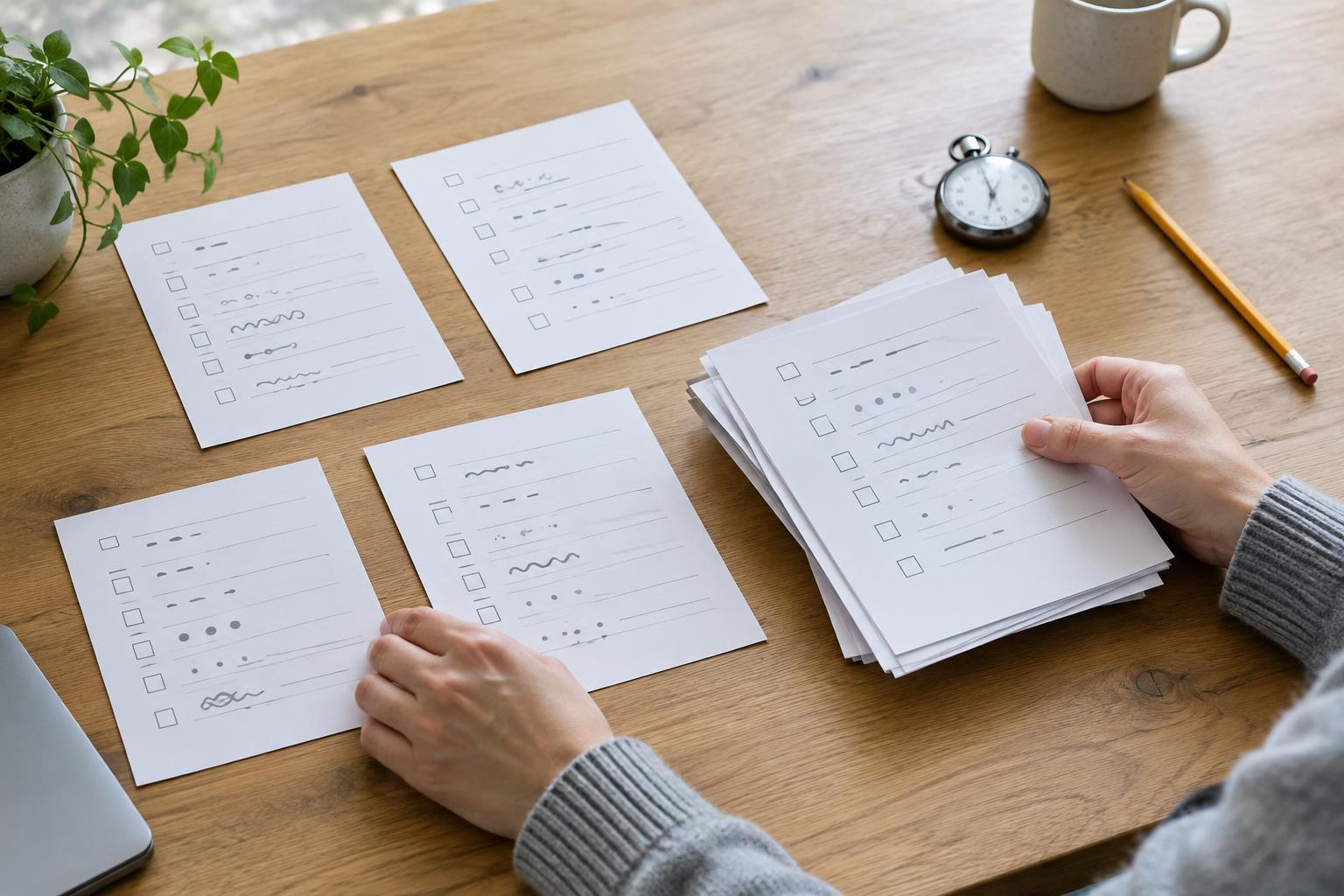
What a pilot test is for
A pilot test is a small trial run of a questionnaire before its main launch. Its purpose is not to prove that the survey will produce a particular result. It is to find problems while they are still easy to fix: questions people interpret differently, answer choices that do not fit, confusing instructions, and technical paths that send respondents to the wrong place.
Start by writing down what each question is meant to help you decide or understand. If you cannot explain a question’s purpose, consider removing it. This gives the pilot a clear standard: you are checking whether respondents can provide the information you actually need, not simply whether they can reach the final screen.
Test the questionnaire in the form people will use. A printed draft may reveal wording problems, but it cannot show whether a mobile screen cuts off an answer choice or whether an online skip rule works. If you plan to use more than one device or survey mode, include each in the trial.
Choose participants who can reveal different problems
Invite people who resemble the intended respondents in the ways that matter to the survey. For a questionnaire about a customer experience, that may mean including both frequent and occasional customers. If a question applies only to some respondents, include people who should enter that path and people who should bypass it.
You do not need a large or statistically representative pilot to notice that an instruction is unclear. A small group with varied relevant experiences can expose different interpretations and missing answer options. Keep the distinction clear, though: feedback from a pilot does not tell you how common an opinion is in the full audience.
Ask participants to answer as they normally would, without coaching them through difficult questions. If someone asks for clarification, note the question and what prompted the request. You can discuss it afterward, but explaining it during the survey may hide a problem that other respondents will face alone.
Watch the answering process, not just completion
Observe where participants pause, reread, change an answer, or abandon a question. These moments are prompts for follow-up, not proof that the wording is wrong. After the participant finishes, ask what a key term meant to them or how they chose between two similar options. Use open prompts such as “What were you thinking about when you answered this?” rather than suggesting the answer you hoped they would give.
Check the time and effort the survey requires. A questionnaire that feels short to its writer may demand repeated calculations or force respondents to recall details they do not know. Look especially at questions with long lists, vague time frames, or instructions that change from one screen to the next. Offer a suitable “not applicable” or “don’t know” option when forcing a guess would make the data less useful.
Pay attention to the opening and closing as well. Respondents should understand what the survey is about, what participation involves, and whether they may skip questions where appropriate. If a question requests personal information, confirm that it is necessary for the research purpose and that the wording makes clear what is being asked.
Inspect the data the pilot produces
Once the trial responses are in, review the records as if you were preparing to analyze the full survey. Are the answer labels understandable outside the questionnaire? Do response options cover the situations participants described? Are text boxes collecting useful detail, or are people using them to report that no listed choice fits?
Test every question path, including less common ones. A respondent who selects “no” should not be sent to detailed follow-up questions intended only for people who selected “yes.” Check required fields, validation messages, and whether a participant can correct an earlier answer without creating a contradiction. If the survey uses scales, make sure their direction and labels stay consistent.
Do not treat an unexpected pilot result as a reason to rewrite a question until it yields the answer you expect. Revise when the question fails to measure the intended idea clearly, not when respondents express an inconvenient view. That distinction helps protect the usefulness of the main survey.
Revise, retest, and decide when to launch
Keep a simple change log: the problem observed, the change made, and the reason for it. Prioritize issues that could alter the meaning of an answer or prevent someone from completing the survey. Shortening a long introduction may help, but fixing a misleading question or broken skip rule matters more.
After substantial edits, run another short check. New wording can introduce fresh ambiguity, and changes to question order can affect paths that previously worked. Ask someone who did not build the questionnaire to complete it from start to finish on a typical device. Confirm that exported responses still match what appeared on screen.
Launch when the questionnaire is clear enough to answer consistently, its paths work, and its responses can support the decisions it was designed to inform. A pilot cannot remove every uncertainty. It can prevent avoidable survey errors and make the limits of the resulting data easier to understand.