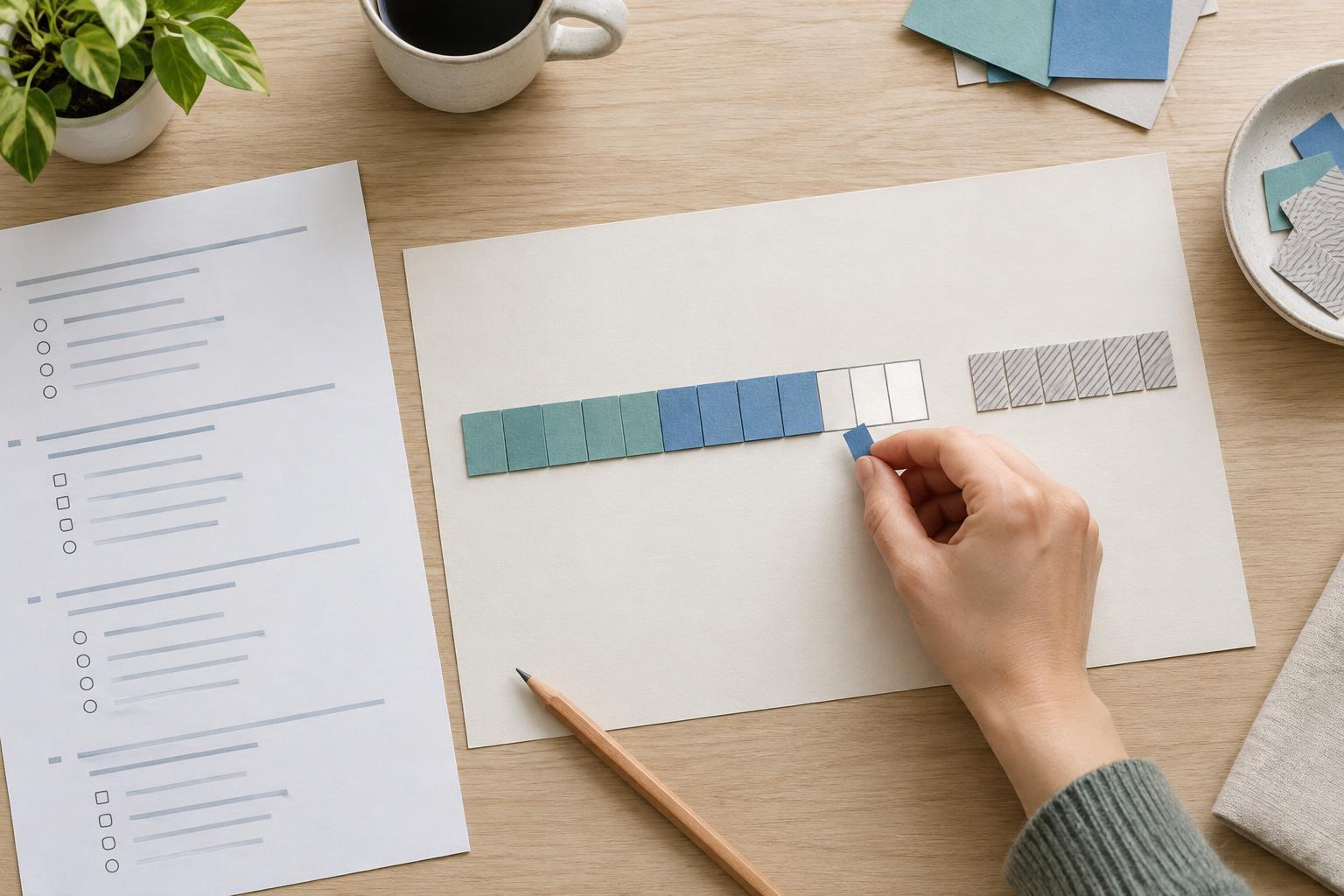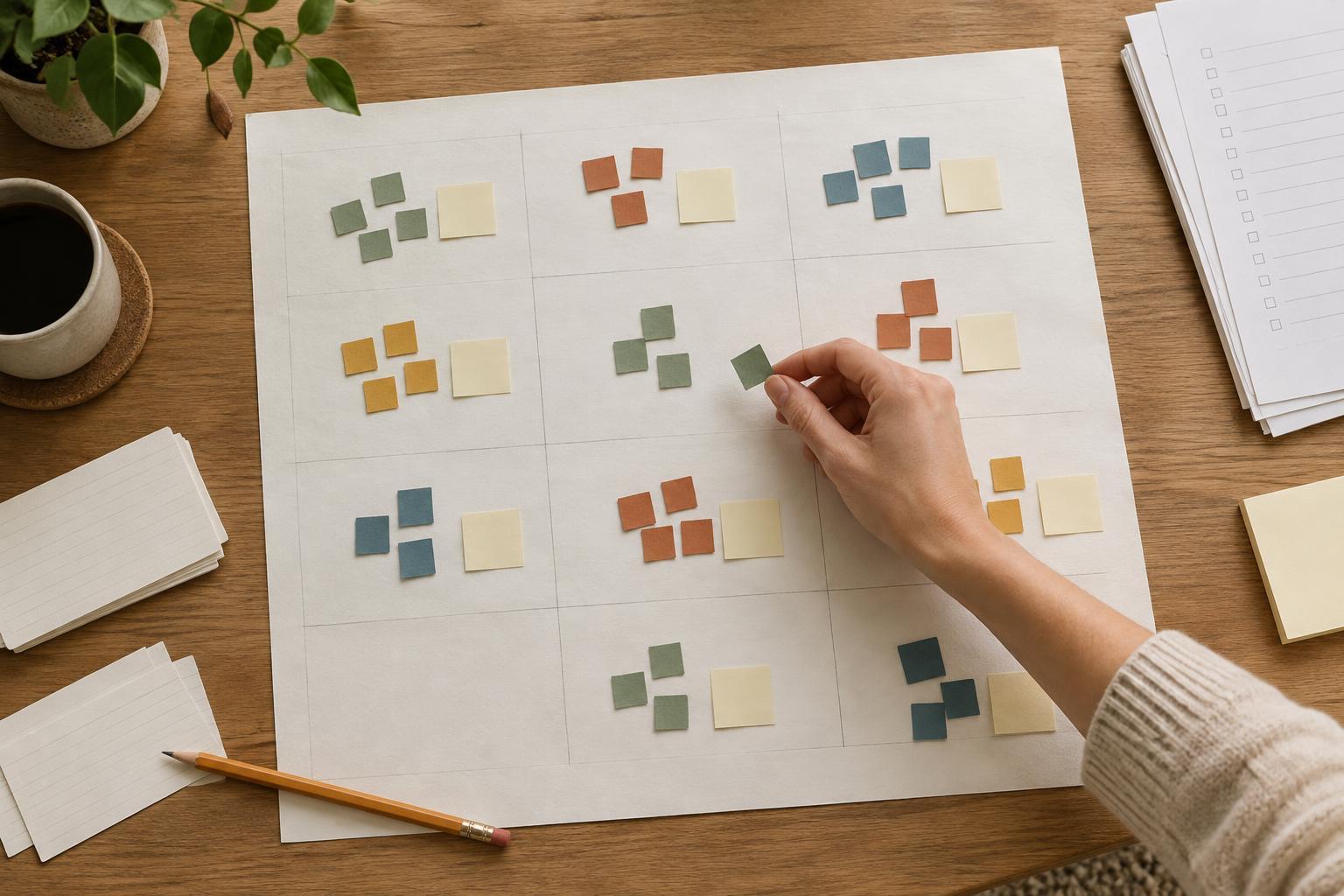
Start with the decision the survey should inform
A shopping journey describes the steps someone may take from recognizing a need to reflecting on a purchase. It is a planning tool, not a claim that every shopper behaves in the same order. Someone might compare several options before leaving home, while another might stop somewhere on impulse. Mapping those possibilities before drafting questions helps you ask about meaningful moments rather than assembling a long list of topics.
Begin with one practical decision. For example, are you trying to improve how people find a market, understand why visitors leave without buying, or learn which information helps them choose a vendor? Write down what you could change in response to the findings. If a question cannot help distinguish between realistic actions, consider leaving it out. This keeps the survey focused on a purpose rather than on everything that might be interesting to know.
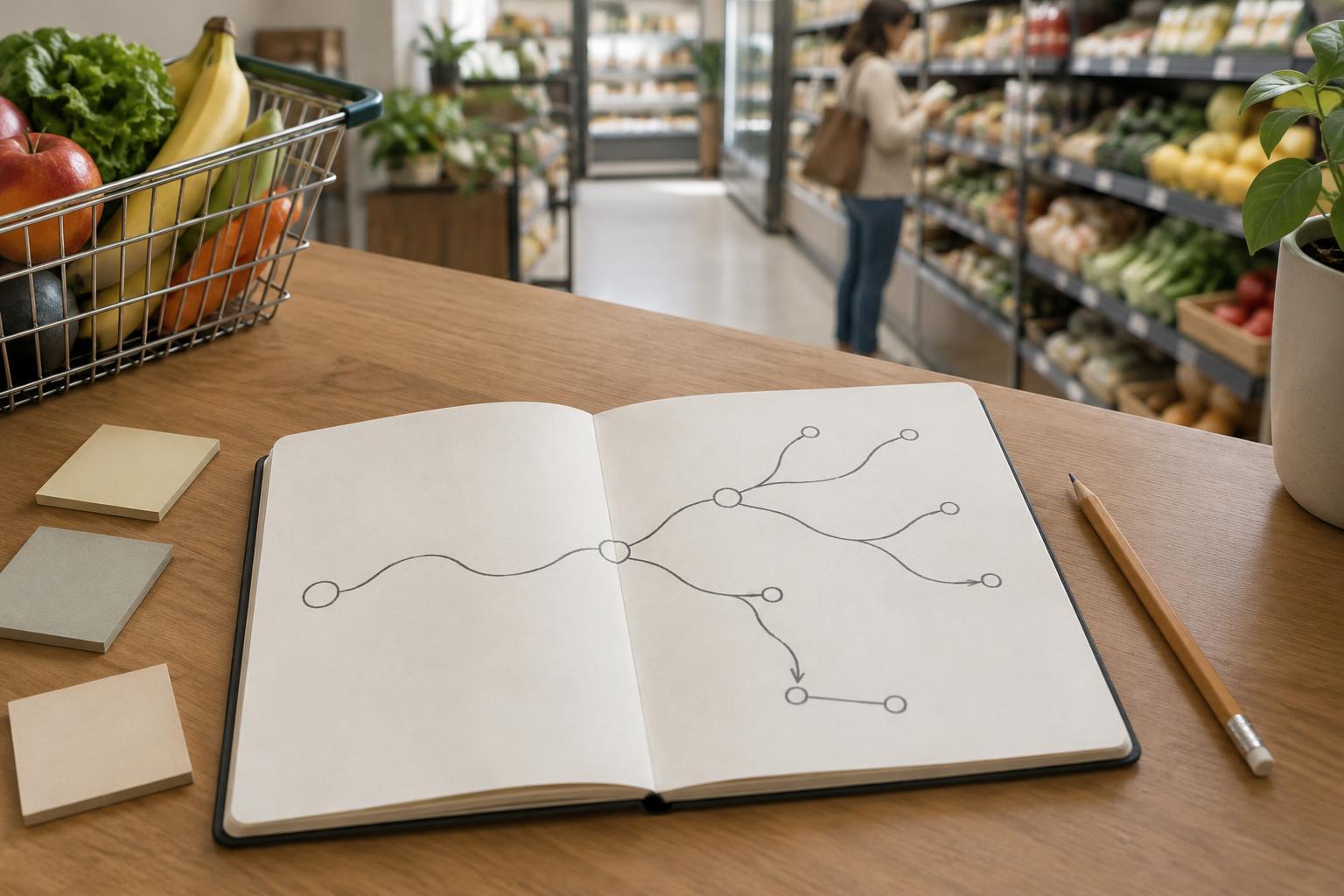
Sketch the journey, including paths that end early
Draw a simple sequence: deciding whether to shop, planning a visit, arriving, looking around, choosing what to buy, and evaluating the experience afterward. Under each stage, note a possible question and the action its answer might inform. For example, a question about how visitors found opening hours belongs near the planning stage; its answers might guide how those hours are displayed. A question about finding a particular item belongs at the visit stage and might inform signs or product information.
Include people who never arrived and visitors who bought nothing, if they are part of the audience you can reach. Otherwise, a survey of purchasers may tell you about completed trips but little about barriers to visiting or buying. Also mark where paths branch: first-time and repeat visitors, planned and spontaneous visits, or shoppers looking for one item and shoppers browsing. These are prompts to consider differences, not categories that everyone must fit into. For examples of the kinds of shopping situations you might map, browse Market Shopping · Florida Market Table as a source of context and ideas, not as evidence about your own audience.
Turn each stage into answerable questions
Ask about experiences respondents can reasonably describe. Instead of asking broadly why someone chose a market, you might ask which information they looked for before their most recent visit and provide an option for those who did not look for any. For an on-site stage, ask whether they found the item they came for before asking what made it easy or difficult. This sequence avoids asking people to explain an experience they did not have.
Decide which questions need to reach everyone and which depend on an earlier answer. Someone who has not visited should not have to rate checkout, but they may be able to describe what prevented a visit. Someone who visited without intending to purchase should not be treated as though they abandoned a purchase. Keep questions about a specific trip anchored to the same trip throughout the survey so answers can be interpreted together. If you need broader browsing context while developing scenarios, Florida Market Table offers another place to explore market-related topics; your survey questions should still be tailored to the people and decisions you are studying.
Check the map against the survey you built
Before launch, compare the draft questionnaire with the journey map. Does each important stage have enough coverage to inform your chosen decision? Are there questions that do not connect to any stage or action? Coverage does not mean giving every stage equal space. If your decision concerns arrival information, a short question about the purchase experience may be sufficient, while planning and arrival deserve more attention.
Finally, test the draft with a few people who might take it. Ask them to describe which trip they had in mind, where a question did not fit their experience, and whether they could find an honest response option. Revise the map as well as the wording if their paths differ from those you imagined. The finished map is not the finding; it is a way to make sure the survey gathers answers you can interpret and use.